
藍染風布 丹羽花菜子
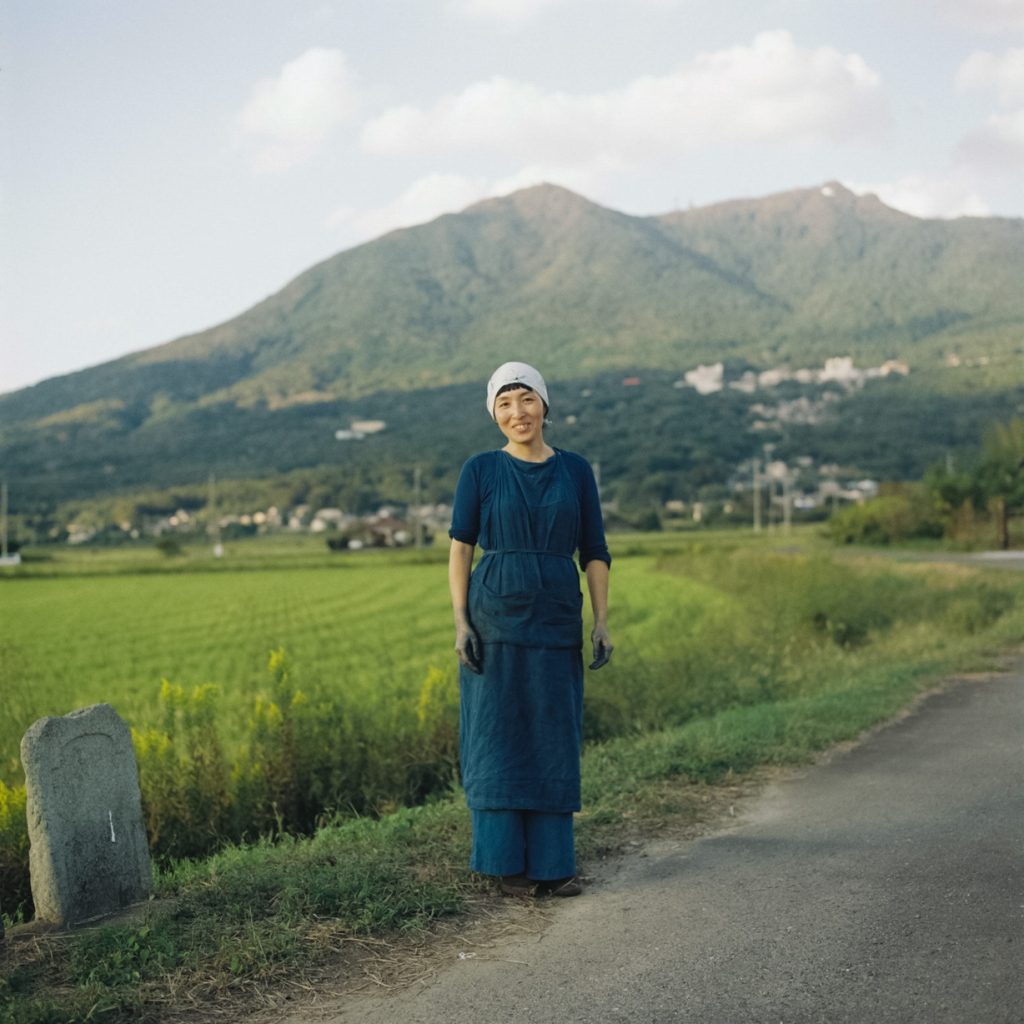
筑波山の麓、美しい藍染の色。
AIZOME FOOPU Kanako Niwa
The foot of Mt. Tsukuba, the beautiful colors of indigo.

藍甕の中で藍は人の手に触れどう変化し、どうやってその色を出すのだろうか。
藍甕の中にある世界のこと、染めるということ。さまざまな話を聞いた。
丹羽さんの藍染工房で。
Indigo in the pot, how it changes when touched by human hands, and how it produces its color.
Stories about the universe inside the pot, and about dyeing.
At Niwa’s AIZOME, indigo-dyeing workshop.

藍染をするにはまず藍建(あいだて)をする。
これは蒅⑴の色素を灰汁⑵の中で微生物の働きによって還元させ、染液を作る工程のこと。
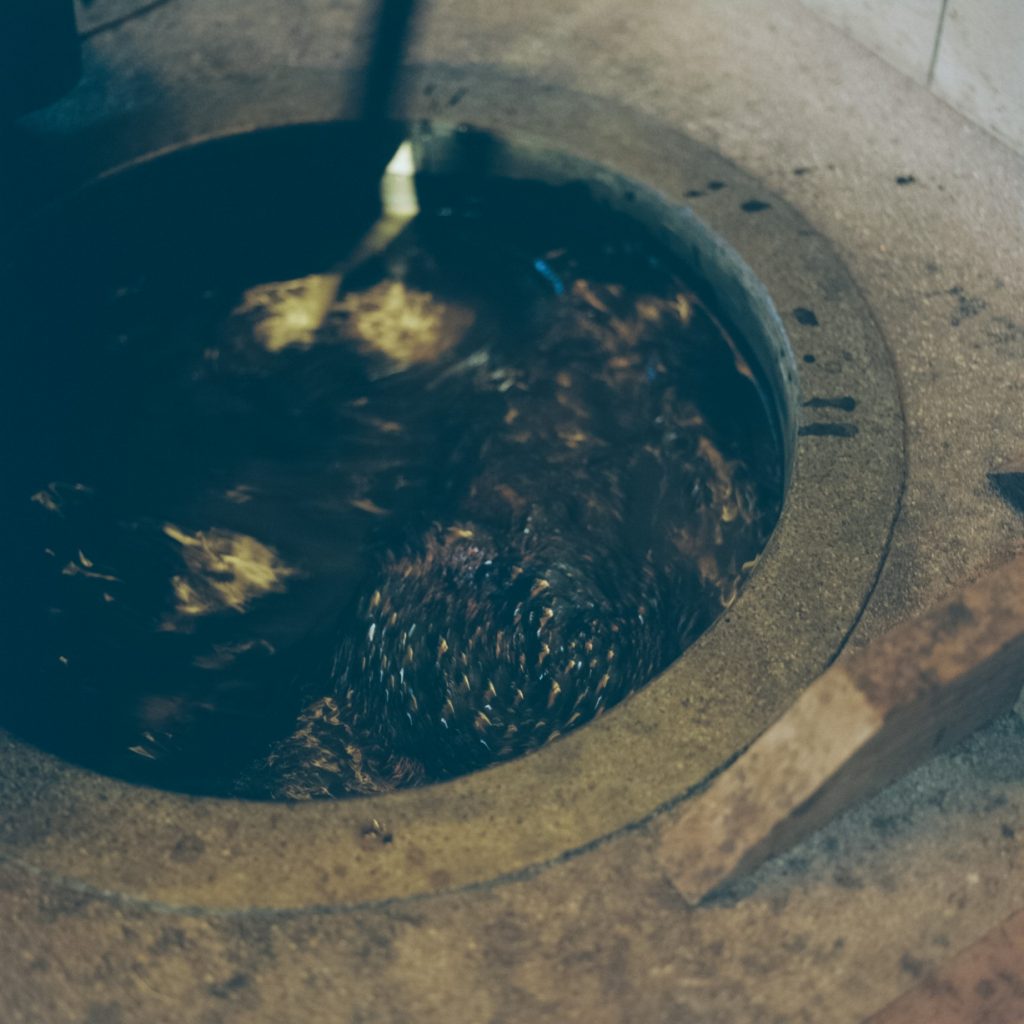
最初は甕の6分目くらいまで原料を仕込み、一日に2回ずつ、この液体を攪拌する。3日ほど経
つと表面に紫色の膜が張り、青い色が出始める。
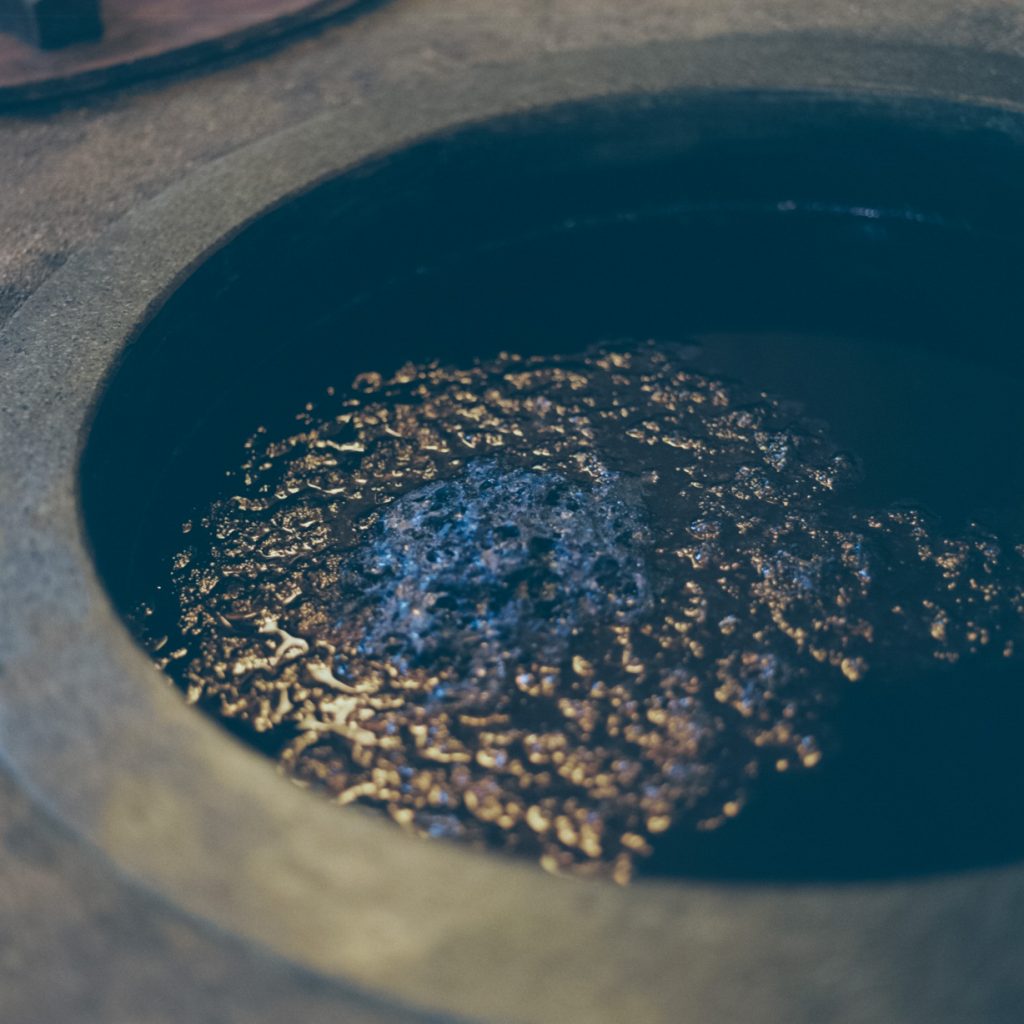
そこで撹拌すると紫色の泡、藍の華が生まれる。
一週間ほどの間、温度とアルカリ度数を管理しながら嵩上げと攪拌を行い、また休ませる。
こうして安定した状態になって、ようやく染めることができる。
(1) すくも:藍染の染料
(2) 木灰から作るアルカリ性の水溶液
To do AIZOME indigo-dyeing, the first thing to do is AIDATE.
This is a process to make the dye by resting SUKUMO⑴ in AKU⑵, with the help of microorganisms in a pot.
To start with, fill the pot with dye till about 60% of its capacity, and stir it twice a day. About 3 days later, purple film forms on the surface of this liquid, followed by the blue color.
It’s important to give indigo a good environment. After dyeing, the indigo flowers bloom again when stirred.Indigo requires human hands to keep a good balance inside the pot.
Another week to stir by adding the liquid till the pot’s full, with
carefully watching the temperature and alkalinity, and give it a good rest again.Finally, the dye gets stable, and it’s ready to dye.
(1) Sukumo : fermented Indigo dye
(2) Aku : lye, alkaline solution made from wood ash
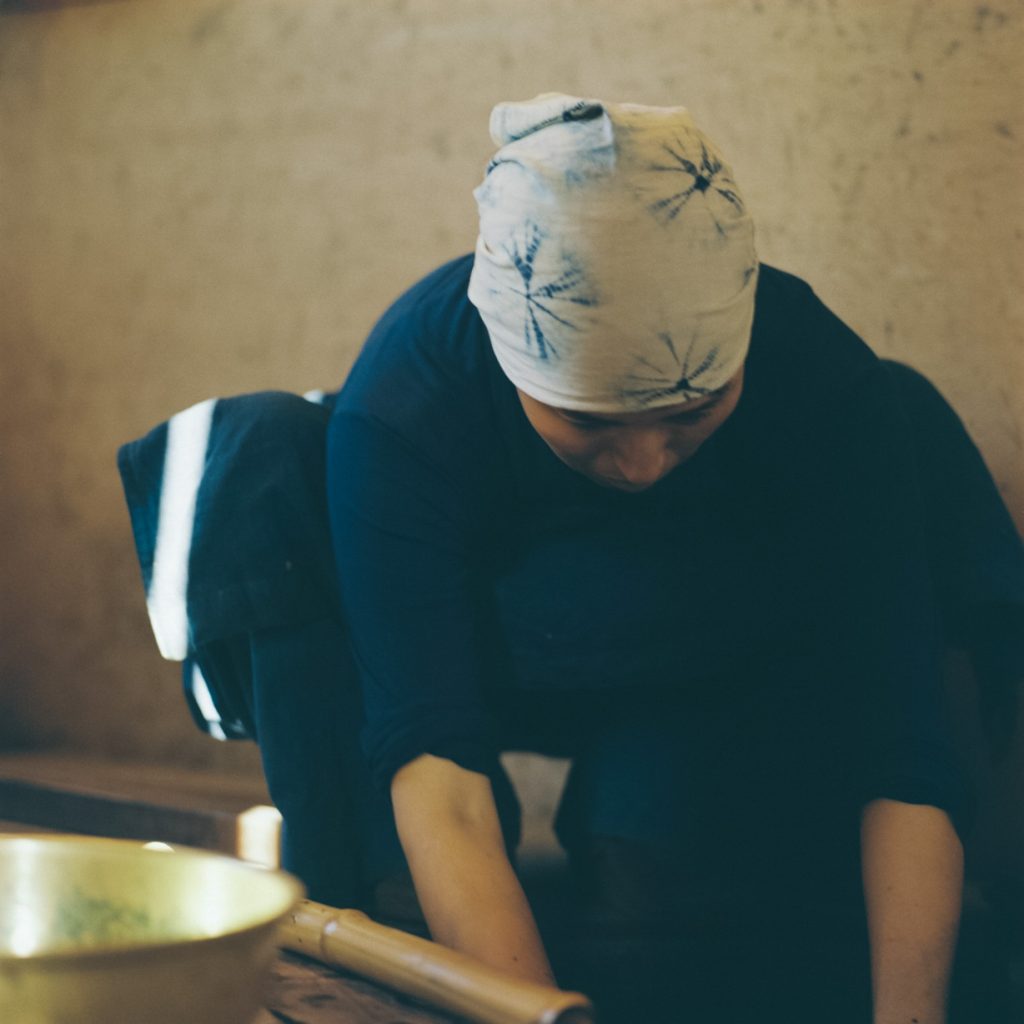
ゆっくりと時間をかけてあげると甕の中の世界が安定するんです、と丹羽さんは話してくれた。
藍に良い環境を整えてあげることが大切だと。
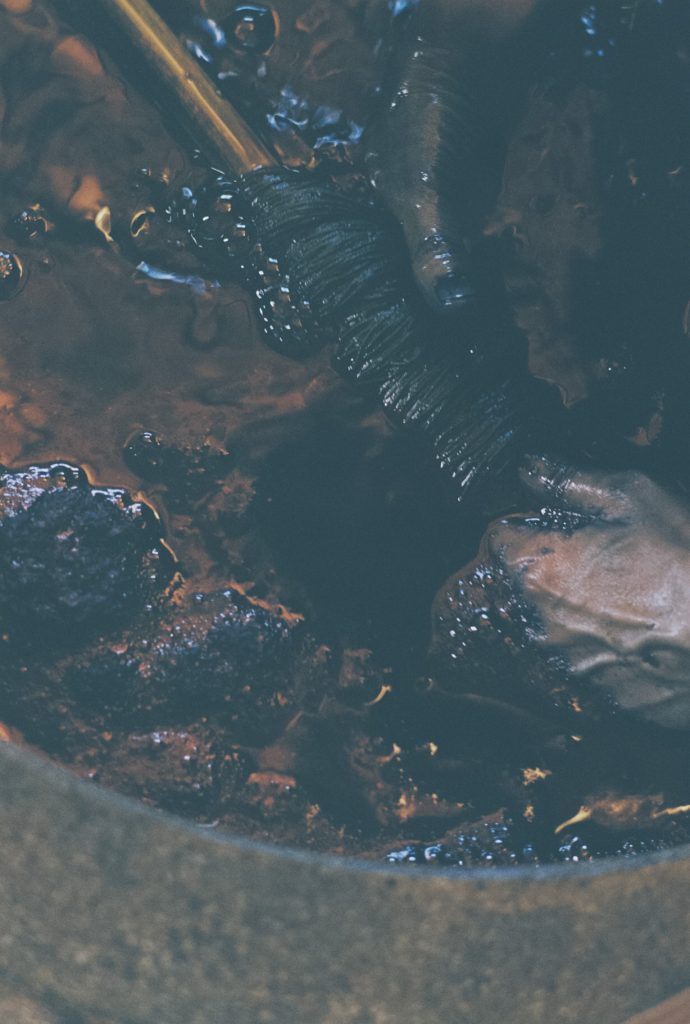
染めた後、撹拌すると再び藍の華が咲く。
甕の中のさまざまなバランスを人の手で整える、それを必要とするのが藍なのだ。
時間が経つにつれて、染まる色味は少しずつ鈍くなっていく。
藍染の世界では好まれないこともある灰色がかった鈍い色合いも、自然からこそ生まれるもの。
だから昔の人は、そんな色合いを紺鼠や藍鉄などと呼んで大切にしたんだろう。
その時だから出会える色との一期一会。
時間の経過とともに表れる色の変化。ひとりでできる規模の工房だからこそ伝えられる色もあるのかもしれない。
以前は染め上げた後にしっかり処理をして、それ以上色落ちしない完璧さが良いと思っていた。
しかしある時、あまり洗い込まず灰汁が残っている渋い藍の色が好きだという人と出会った。
そこに気づきがあった。
完璧に仕上げず、自分で洗うことでわかる色の変化を楽しむことも、藍の美しさのひとつ。
そこには育てる感覚と、大切な価値観がある。
藍と人の手が触れた時、そこにはさまざまな変化が生まれる。
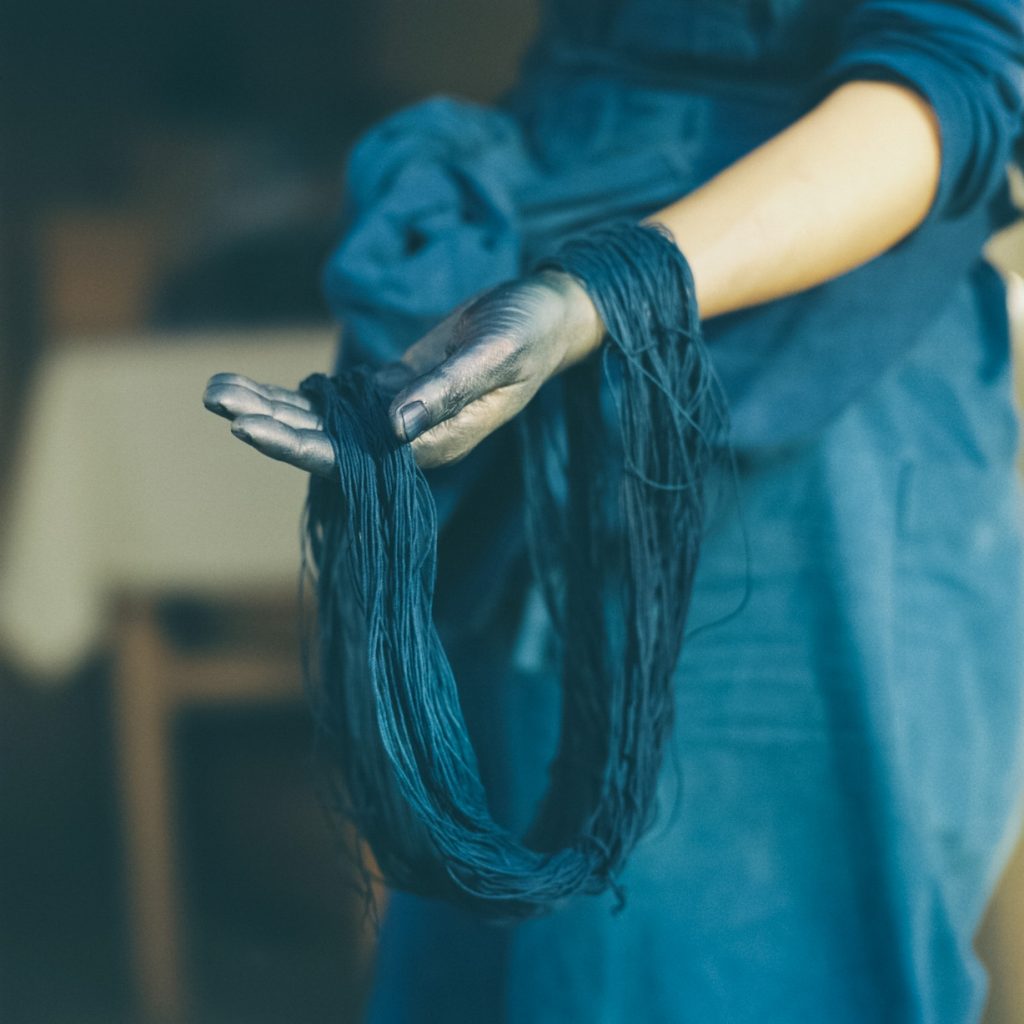
藍に染まった手が、その何よりの証拠だ。
Taking a long time to prepare helps making the universe in the pot sound and stable, Niwa says.
It’s important to give indigo a good environment. After dyeing, the indigo flowers bloom again when stirred.Indigo requires human hands to keep a good balance inside the pot.
As time goes by, the dyeing color becomes dull little by little. Grayish color is not always appreciated as indigo, but this is also a color from nature.
In the old days, people cherished even the dull Indigo colors and named them like KONNEZU or AITETSU. Niwa says that she wants to cherish one-time encounters with various shades of colors.
Colors change over time, and some colors may only be born from an independent workshop where everything is done by one person.Niwa used to prefer making a perfect finish to avoid further fading. One day, however, she met a person who loved the subdued indigo tone which was not washed so much leaving lye in it.
It was an awakening moment for her. One of the beauties of indigo is that you can enjoy the changes of colors that occur when you wash them.There is a sense of nurturing and important values there.
When indigo is touched by human hands, various changes happen.Her hands dyed in indigo tell us all about it.

Text Yoko Iwasa , Masa Hamanoi