
益子焼 阿久津忠男
深い青
益子には雨巻山という美しい里山がある。
阿久津さんとは、その雨巻山で出会った。
そしてその後、阿久津さんが作る深い青、青瑠璃の器を知ることになる。
出会いから数年を経て、雨巻山の麓にある阿久津さんの工房を訪ねた。
Mashiko ware by Tadao Akutsu
Deep Blue
Mashiko has a beautiful Satoyama landscape called Amamaki-yama mountain.
That is where I met Tadao Akutsu.
And later, I got to know the deep blue, lapis-blue ceramics he creates.
Several years after our first encounter, I visited Akutsu’s workshop at the foot of Amamaki-yama mountain.


工房は窓からの光が優しい。
まず目に入ったのはろくろ、そして工房の中ほどにある大きな塊。
この粘土を使っているよ、今は少し固いかもしれないな、、、
これは信楽の土、白っぽい粘土には瑠璃釉が映えるんだ
粘土はまず練ることで、空気を抜いたり、異物を取り除いたりする。
その時々で変わる様々な条件に合わせて土を練る。
ろくろの上では荒のばしをして、真ん中を土どりする。
鹿のなで皮を使って、皿のヘリが欠けないように角を丸く仕上げていく。
土を皿の形にする作業は阿久津さんの感覚によるところ。測ったりはしない。
Soft lights are coming into the studio through the windows.
I noticed the potter’s wheel first, then a large lump of clay in the middle of the room.
“I use this clay. It might be a bit stiff right now…”
“This is Shigaraki clay. The lapis glaze shines beautifully on the whitish clay.”
Clay is first kneaded to remove the air and impurities.
Akutsu kneads the clay differently each time depending on the constantly varying conditions.
On the wheel, he shapes the clay roughly, then removes some clay from the center.
Using deer hide, Akutsu rounds off the edges of the plate to prevent the rim from chipping.
Shaping the clay into a plate entirely done by his hands, not by a tool to measure.


阿久津さんの青を出すのは瑠璃釉。コバルトの成分が変化して生まれる、深い青だ。
もう手に入れることはできない古代の呉須の代わりに、純度の高いコバルトに様々なものを混ぜて、古の瑠璃釉に近づけていく。
一昔前、瑠璃釉は全然目立たない存在でね、それこそ以前は何種類か釉薬を使っていたのだけれど、青瑠璃の器を選んでいただくことが多くてね、いつのまにか青瑠璃の器だけ作るようになっていたんだよ
Akutsu brings out his signature blue with lapis glaze. It’s a deep blue coming from the transformation of cobalt components.
To replace the ancient cobalt pigment which is no longer available, he mixes high-purity cobalt with various substances to make it closer to the ancient lapis glaze.
“Back in the day, lapis glaze was not popular at all.
I used to use several glazes before, but a lot of people chose the blue lapis pieces, so I ended up making only the blue lapis wares.”


掘った粘土も面白いよ、
粘土の原土ってのは田んぼの下にある
田んぼの水が漏れないのは下に粘土の原土があるからなんだよ
何年前に掘ったものだろう?これはまだ柔らかいね
原土を切るとね、さまざまなものが見えてくるんだよ
石とか鉱物、異物、長い時間をかけて堆積したものがそのまま出てくる
掘り出した場所が近くても、性質が全く違ったりして面白い
その粘土質のムラを活かして焼くと、ムラがそのまま出現する
焼き上げた後の強くてザラっとした感じが原土の特徴だね
“The clay we dug up from the field is interesting too.
Raw clay lies beneath the rice field.
The reason why water doesn’t leak from rice paddies is because of the raw clay layer beneath them.”
“I wonder when this clay was dug? This is still soft.
When you cut the raw clay, all sorts of things appear.
Stones, minerals, foreign materials —things that have accumulated over the years come out just as they are.
Even if the excavation sites are close by, characteristics of clay can be completely different, which is intriguing.
When you fire it, utilizing those clay variations, the unevenness appears just as it is.
That strong, rough texture after firing is the uniqueness of the raw clay.”


最近は須恵器が気になるという、阿久津さん。
須恵器とは、益子焼よりもずっと昔、1500年ほど前に朝鮮半島から伝わったという焼き物だ。
益子にはその須恵器の古窯がいくつかある。
現代の益子焼との直接の関係はわからないけれど、少なくとも、益子の土が良いという証だろう。
Akutsu says he’s been fascinated by Sueki ware lately.
Sueki ware is pottery said to have been introduced from the Korean Peninsula about 1,500 years ago, long before Mashiko ware.
In Mashiko, there are several old kilns for that Sueki ware.
While its connection to modern Mashiko ware is uncertain, it at least proves the quality of Mashiko clay.


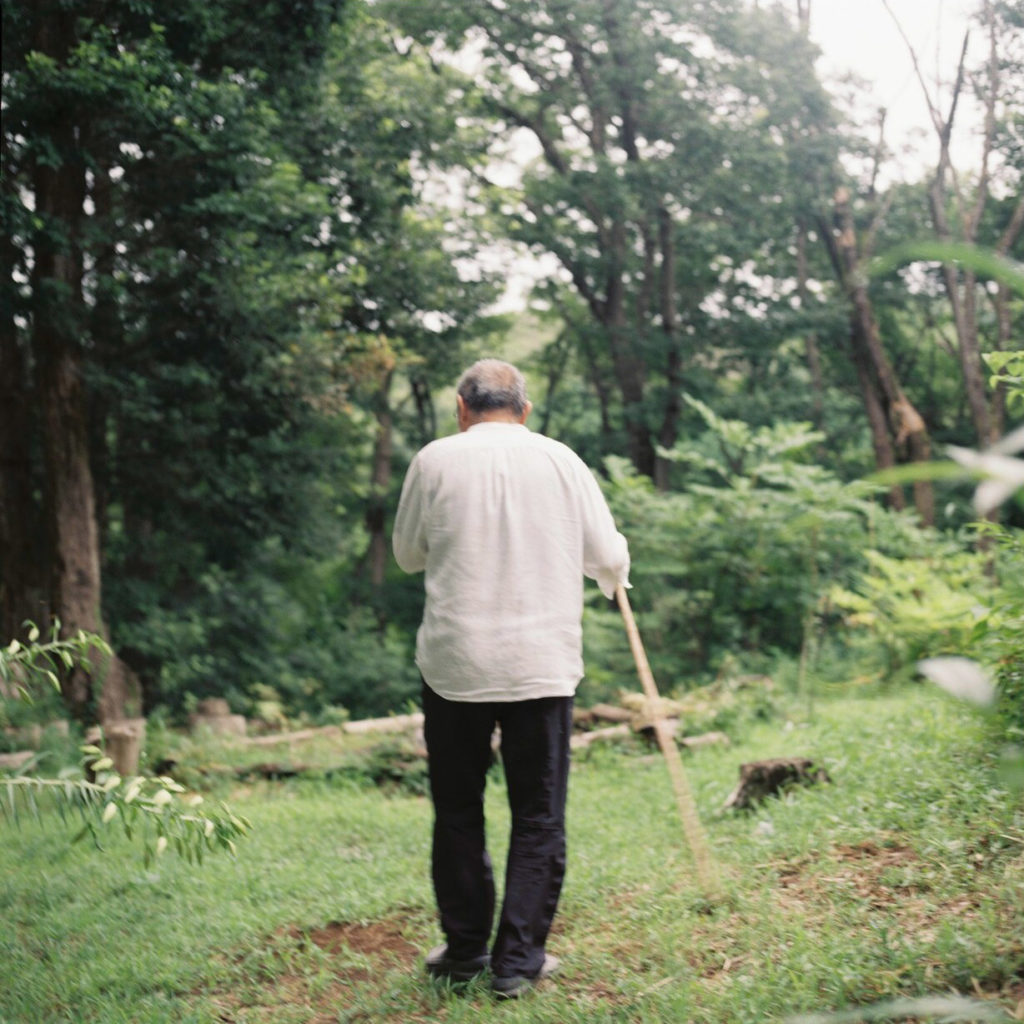
山道を歩いて、須恵器の古窯を阿久津さんと見に行った。
森の斜面にある登り窯の跡。そこには須恵器のかけらも落ちている。
歩きながら、たくさんのおしゃべりをした。
土のこと、木のこと、花のこと。
阿久津さんの足取りは軽い。
古窯跡の上は森が開けていて、明かりが差し込んでいた。
阿久津さんの手から生まれる、深い青。
泥のようにしか見えない瑠璃釉の奥深くに、この青が潜んでいる。
益子の山々や環境、土の個性。
そんな色々が混ざり合って生まれる青は、吸い込まれそうなほど深い。
Walking along the mountain paths, we went to see the old Sueki ware kiln.
Remains of an ascending kiln on a forest slope. Fragments of Sueki ware still lie scattered there.
We chatted a lot as we walked.
About clay, about trees, about flowers.
Akutsu was light on his feet.
Above the kiln, the view becomes open through the trees, letting light stream through.
The deep blue, born from Akutsu’s hands.
In this lapis glaze, which only looks like mud, this blue lies hidden.
Mountains and the environment of Mashiko, and the character of the clay.
That blue, born from all these elements blending together, is so deep and quietly captivating.


Text Yoko Iwasa , Masa Hamanoi